Personalized Medical Care & Dedicated International Patient Concierge

Medical Guide
What Skin Analysis Technology Do Korean Clinics Use?
Skin analysis technology in Korean clinics exists because eyeballing a skin type is unreliable. What measurement adds, and why it matters most for laser work.
Schedule a ConsultationWhat Skin Analysis Technology Do Korean Clinics Use?
Medically reviewed by Dr. Seung-hwan Lee, Family Medicine Specialist & Dermatology Doctor, Representative Director, Plan Me Clinic
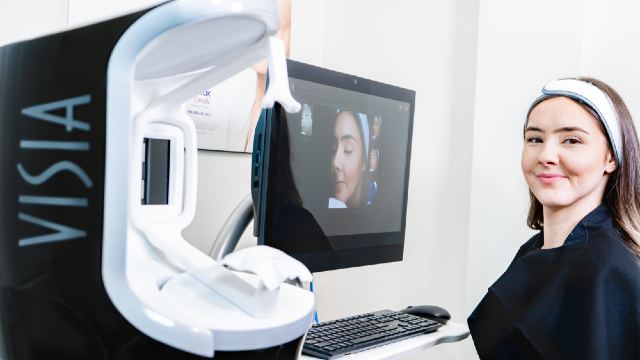
Skin analysis technology in a Korean clinic is not there to impress you. It exists because the alternative — a clinician judging your skin by looking at it, and you reporting how your skin behaves in the sun — is known to be unreliable in ways that matter a great deal once a laser is involved. How Korean clinics assess skin before treatment is therefore a question about measurement replacing estimation, and the literature on why that swap is worth making is unusually clear.
The problem measurement is solving
Almost every conversation about laser suitability starts with skin phototype, and the standard scale for it is the Fitzpatrick classification.
Where that scale came from is recorded in StatPearls, a clinical reference hosted on NCBI Bookshelf by the National Library of Medicine. Thomas Fitzpatrick described it in 1972, and it was built on how a person's skin responded to sun — specifically their answers to how painful their sunburn was and how much tan developed in a week, after a forty-five to sixty minute noon sun exposure in early summer at northern latitudes. Types I to IV originally covered white skin; types V and VI were added later for darker skin. A lower number burns more easily than it tans, and a higher number does the reverse. In the United States the most common phototype is type III at forty-eight percent, with types I and II together making up the next largest group at thirty-five percent.
Then comes the crucial admission. StatPearls states directly that Fitzpatrick classifications are, by their nature, subjective — and that this has driven a search for validated objective alternatives capable of predicting ultraviolet sensitivity more reliably.
That is the whole case for putting a device between the clinician's impression and the treatment decision.
Why self-reporting is not good enough
The subjectivity is not theoretical, and StatPearls is specific about where it breaks.
Describing your own skin's reaction as burning or tanning turns out to be unreliable, because those words mean different things to different people. Patients with skin of color have been shown to report fewer painful burns or tanning episodes, or to have a more limited sense of what tanning means for them. In a population-based study of 2,691 participants, the classification correlated with sun sensitivity among non-Hispanic white and Hispanic participants but not among Black participants. Self-reported pigmentary characteristics and race were found to be significant but incomplete predictors of a person's actual phototype.
StatPearls also stresses a point that is often lost: the scale was designed to capture sun sensitivity, not to stand in for racial or ethnic identity, and the color descriptions in it were meant to denote complexion rather than origin.
For an American patient this is not an abstraction. It means the answer you would give a form about your own skin may not match what your skin does under a laser.
What the instruments actually measure
Objective methods have a track record, and also limits.
An earlier attempt used the Wood's lamp to quantify skin pigments, but StatPearls records that it could not reliably separate phototypes above level II. The current primary tool is the spectrophotometer, used to estimate how much melanin sits in the epidermis and to check self-reported phototypes against something measurable.
Its useful trick is discrimination. A spectrophotometer can tell darkening caused by additional melanin apart from redness produced by inflammation or by increased hemoglobin — two things that look similar to an eye and mean entirely different things clinically. It can also separate a person's baseline color in unexposed skin from the color of skin that has been changed by light. StatPearls reports that all six phototypes can be distinguished with a reflectance spectrophotometer working across the four-hundred-fifty to six-hundred-fifteen nanometer range, while noting that equipment and staffing costs have limited how widely such instruments are adopted.
No objective method is yet treated as a gold standard. StatPearls' assessment is that reflectance spectrophotometers are nonetheless an efficient, noninvasive alternative with a demonstrated record.
There is a plainer illustration of the same principle. The American Academy of Dermatology publishes ultraviolet photographs of ordinary faces and explains what they are for: UV imaging shows accumulated sun damage that the naked eye simply cannot see. The Academy's account of that damage is that sunlight injures healthy skin cells, that the injury accumulates when skin goes unprotected, and that it surfaces over time as freckles, age spots and wrinkles. A camera working outside the visible range is therefore not a gimmick — it is reading a history that is genuinely present in the tissue and genuinely invisible in a mirror.
This is the honest case for imaging at a consultation: not that it sees more than a doctor, but that it sees a different band.
Why this changes laser decisions specifically
Measurement matters here more than in most of medicine because the consequence of getting it wrong is visible on a face.
StatPearls explains the mechanism plainly. Melanin in the epidermis acts as a chromophore, meaning it absorbs laser energy — so in more darkly pigmented skin, more energy is taken up in the epidermis and the risk of injuring it rises. Darker skin also carries larger and more widely distributed melanosomes and more reactive fibroblasts.
The adjustments that follow are concrete. Longer wavelengths are recommended, because deeper penetration improves the ratio between the temperature at the target and the temperature at the surface. Lower treatment densities are suggested where the skin is being resurfaced. Cooling the surface before or after treatment helps prevent pigment problems. StatPearls notes that the risk of hyperpigmentation or hypopigmentation after light-based procedures is higher in phototypes IV through VI, and that pigment disturbance is among the most common reasons people with skin of color consult a dermatologist in the first place.
Every one of those adjustments depends on knowing the phototype accurately. Which is why estimating it is the weak link.
Where this sits at Plan Me Clinic
Plan Me Clinic uses a JANUS Skin Analysis System, and skin assessment with it forms part of the clinic's stated quality-control and safety process — listed there alongside personal consultation before treatment, individual treatment plans, and recommendations based on medical necessity.
The consultation itself is conducted by Dr. Seung-hwan Lee, and your skin condition is assessed as part of it rather than afterward. For a patient traveling from the United States, the useful question to bring is not which instrument the clinic owns but what it found and how that finding shaped what was proposed. An assessment you never hear the results of has not helped you.
Assessment is also a gate rather than a preliminary. The American Academy of Dermatology describes a medical evaluation as preceding filler treatment, with only those who can be treated safely and effectively going on to have it — and its general position is that however routine an aesthetic treatment appears, delivering it safely rests on detailed knowledge of the skin's anatomy. The FDA adds a specific example of something an assessment has to surface: it records that the safety of fillers is unknown in people prone to excessive scarring, whether keloid or hypertrophic. That is a personal history no instrument can measure and no clinician can guess, which is why measurement and questioning sit side by side rather than one replacing the other.
You can ask about the assessment step through the clinic's consultation and inquiry page, and its about us page sets out how the practice is organized.
The Bottom Line
- The Fitzpatrick scale, dating from 1972 and based on burning and tanning responses, is described by StatPearls as subjective by nature — which is why objective alternatives have been sought.
- Self-report is unreliable in specific ways: in a study of 2,691 people the scale tracked sun sensitivity in non-Hispanic white and Hispanic participants but not in Black participants.
- Spectrophotometers estimate epidermal melanin and can separate melanin darkening from inflammatory or hemoglobin-driven redness, distinguishing all six phototypes across the 450–615 nanometer range.
- Accuracy changes treatment: for phototypes IV to VI, longer wavelengths, lower resurfacing densities and surface cooling are all recommended to limit pigment injury.
- Plan Me Clinic uses a JANUS Skin Analysis System for skin assessment as part of its stated safety process, with the consultation conducted by Dr. Seung-hwan Lee.
Frequently Asked Questions
What is the Fitzpatrick scale?
A six-point classification of how skin responds to sun exposure. StatPearls records that Thomas Fitzpatrick described it in 1972 using questions about sunburn pain and how much tan developed in a week, with types I to IV covering white skin and types V and VI added later.
Why not just have the doctor look at my skin?
Because looking is estimation. StatPearls describes Fitzpatrick typing as subjective by nature and notes that validated objective alternatives have been pursued precisely to predict ultraviolet sensitivity more reliably.
What does a spectrophotometer add that an eye cannot?
Discrimination between two things that look alike. It separates darkening caused by melanin from redness caused by inflammation or increased hemoglobin, and it distinguishes baseline skin color from color altered by light exposure.
Does my skin tone change how a laser should be set?
Yes. StatPearls sets out that higher phototypes carry more epidermal melanin, which absorbs laser energy, and that longer wavelengths, lower treatment densities in resurfacing and surface cooling are all recommended to reduce the risk of injuring the epidermis.
Is post-treatment pigment change a real risk for me?
It depends on your phototype. StatPearls reports a higher risk of hyperpigmentation and hypopigmentation after laser and light-based procedures in phototypes IV through VI, and notes that pigment disturbance is a leading reason people with skin of color see a dermatologist.
What does Plan Me Clinic use?
A JANUS Skin Analysis System, used for skin assessment. It appears in the clinic's stated quality-control and safety process alongside consultation before treatment and individual treatment planning.
Should I ask to see what the assessment found?
Yes. The assessment is only useful to you if its findings are explained and you can see how they shaped the proposal. That is a reasonable thing to ask for at the consultation.
Is the assessment done by the doctor?
The consultation, including assessment of your skin condition, is conducted by Dr. Seung-hwan Lee, who is the practice's only physician.
This article is for general informational purposes and does not constitute individualized medical advice. It is not a self-diagnosis tool. Discuss your own skin, phototype and treatment history with a qualified dermatologist or physician in person before starting any laser or light-based treatment, and follow the guidance you are given.
More Articles
Continue reading our clinical guides.