Personalized Medical Care & Dedicated International Patient Concierge

Medical Guide
What Happens at a First Korean Dermatology Consult
What to expect at a first consultation in Korea: the order it runs in, what the doctor examines, what you will be asked, and what you leave with.
Schedule a ConsultationWhat Happens at a First Korean Dermatology Consult
Medically reviewed by Dr. Seung-hwan Lee, Family Medicine Specialist & Dermatology Doctor, Representative Director, Plan Me Clinic
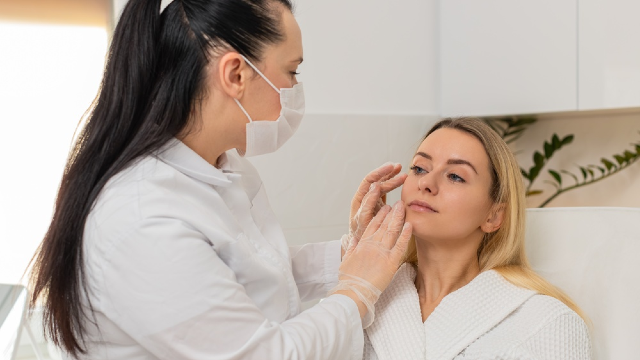
Knowing what to expect at a first consultation in Korea removes most of the anxiety about it, because the appointment is more ordinary than the travel around it suggests. A Korean dermatology consultation process has a fixed shape: the doctor examines the thing you came about, asks a set of questions designed to rule out reasons not to treat you, explains what he thinks is going on, and only then proposes anything. The proposal comes last. That order is the whole point of the visit.
The short version of the sequence
At Plan Me Clinic, the first visit runs in the same order regardless of what you came for. Dr. Seung-hwan Lee, the practice's only doctor, conducts the consultation himself. Your skin condition is assessed. Your relevant history is reviewed. A plan is then designed around what the assessment found, and the treatment itself follows only after that.
The clinic's stated safety process puts personal consultation before treatment as a fixed step rather than an optional one, alongside individual treatment plans, use of a JANUS Skin Analysis System for skin assessment, and recommendations based on medical necessity.
That last item is worth pausing on. A consultation whose function is to establish whether treatment is warranted is a different appointment from one whose function is to sell a package, and you can usually tell which you are in by whether anything is ruled out.
What the doctor is actually examining
The examination is specific to what you came about, and the clinic's procedure records show how narrowly.
For Botox, Dr. Seung-hwan Lee evaluates the relevant muscle activity, your skin condition, the specific concern and your treatment goals. Injection sites and dosage are determined from that assessment rather than from a standard dosing pattern, and the areas considered may include the forehead, the glabella, crow's feet, the masseter muscle, the calves or the underarms.
For dermal filler, the assessment covers facial structure, skin condition, aesthetic goals and the areas of concern, and the filler type, volume and injection sites follow from it.
For toenail fungus laser treatment, the review is different again: he examines the nail condition and the relevant parts of your medical history, including pregnancy, medication use and liver-related concerns, to establish whether laser treatment is appropriate at all.
Three different examinations, one principle. The doctor is establishing what is causing the problem and whether the treatment you are considering acts on that cause.
What you will be asked, and why each question matters
The history-taking is the part patients tend to find surprisingly long. It is also the part doing the most safety work, and the reasons are documented by US authorities.
MedlinePlus, the National Library of Medicine's patient-facing drug reference, sets out what should be disclosed before botulinum toxin treatment: allergies to any botulinum product, all other prescription and non-prescription medicines and supplements, any swelling or sign of infection where the injection would go, any previous side effect from a botulinum product or from eye or facial surgery, weakness in the area to be injected, and any history of bleeding problems, seizures, an overactive thyroid, diabetes, or lung or heart disease. Pregnancy, planned pregnancy and breastfeeding all belong on the list, as does any upcoming surgery, including dental surgery.
For fillers, the Food and Drug Administration lists what to raise before the procedure: inflamed or infected skin at the site, a bleeding disorder, severe allergies or a history of anaphylaxis, and allergies to collagen, eggs, animal products, local anesthetic such as lidocaine, or bacteria — because different filler products contain different ones of those. Where the hand is being treated, joint, tendon or blood vessel disease affecting the hand matters too.
None of these questions is a formality. Each one has a specific product or complication behind it, which is why a thorough version takes time.
The examination that can end the conversation
A consultation that cannot conclude "not this, or not yet" is not really an examination.
The American Academy of Dermatology describes the sequence plainly: a patient receives a medical evaluation before a filler, and only patients who can be safely and effectively treated go on to receive one. Its wider view is that safe delivery rests on knowing the anatomy of the skin, however routine a cosmetic treatment may look from the outside.
MedlinePlus adds a specific example of an assessment producing a negative answer. Before treating wrinkles with botulinum toxin, it notes, the doctor will examine you to judge whether the medication is likely to work for you at all, and records that it may not smooth wrinkles, or may cause other problems, in people with drooping eyelids, difficulty raising the eyebrows, or other changes in how the face normally looks. It also records that in people aged 65 and over the cosmetic treatment has not worked as well as in younger adults.
If you leave a consultation having been told that something is unsuitable for you, that is the process functioning.
What you leave with
The output of the visit is an individual treatment plan and an explanation of it. The concerns US patients bring to an in-person consultation, as recorded by the clinic, are precisely this: an assessment of their own skin condition, recommendations specific to them, a clear explanation of which treatments are suitable, avoiding treatment that is not needed, a discussion of their own goals, an understanding of how the process works, and follow-up afterward.
Practical durations are short once a plan exists. A Botox session typically runs about ten to twenty minutes depending on how many areas are treated, with a follow-up assessment usually within one to two weeks. A filler session typically takes fifteen to thirty minutes. A toenail fungus laser session takes roughly fifteen to twenty minutes, and a series of sessions is generally recommended rather than a single appointment.
Two further questions belong in the room rather than in a later message, and both come from the Yellow Book published by the Centers for Disease Control and Prevention. Ask which services are actually included in what you have been quoted, because some facilities bill follow-up care on top of the base figure. Then ask whether that follow-up is scheduled to take place at the same facility.
You can arrange an initial discussion through the clinic's consultation and inquiry page, and the practice describes its approach and its single-physician structure on its about us page.
The Bottom Line
- The order is fixed: examination, then history, then explanation, then a proposal. Anything proposed before you have been examined is out of sequence.
- What is examined is narrow and specific — muscle activity for Botox, facial structure for filler, nail condition and relevant history for toenail laser treatment.
- The history-taking is doing safety work. MedlinePlus and the FDA both publish lists of conditions, allergies and medicines that change whether treatment should go ahead.
- A consultation can legitimately end in "no". The American Academy of Dermatology describes medical evaluation as preceding a filler, with only suitable patients treated.
- Sessions are short once a plan exists: roughly ten to twenty minutes for Botox, fifteen to thirty for filler, fifteen to twenty for a toenail laser session.
Frequently Asked Questions
Who conducts the consultation?
Dr. Seung-hwan Lee. Plan Me Clinic has one doctor, and he performs the consultation personally.
Will I be treated on the same visit as the consultation?
That depends on what the assessment finds and what is planned. The clinic's sequence puts consultation and assessment before treatment, so the plan is settled first; sessions themselves are short once it exists.
How long does the appointment take?
The consultation length varies with how much history is relevant. The treatment sessions that may follow are brief — about ten to twenty minutes for Botox, fifteen to thirty for filler, and fifteen to twenty for a toenail fungus laser session.
What is the JANUS Skin Analysis System used for?
Skin assessment. It forms part of the clinic's stated consultation and safety process, alongside personal consultation before treatment and individual treatment planning.
Will the doctor tell me if a treatment is not suitable for me?
That is an expected outcome of the assessment. For toenail fungus laser treatment, for instance, he reviews nail condition together with pregnancy, medication use and liver-related concerns specifically to establish whether the treatment is appropriate.
Does it hurt, and is anything used for that?
A topical numbing cream may be applied before injection. For Botox it is used particularly for more sensitive areas or higher-dose work; for filler it is applied to the treatment area to reduce discomfort.
What happens after the treatment?
A follow-up assessment is part of the plan. After Botox it typically falls within one to two weeks. For toenail fungus laser treatment a series of sessions is generally recommended, since the infection and the nail regrowth both resolve gradually.
Are surgical options discussed at the consultation?
No, because the practice does not offer them. Its treatment range is entirely non-surgical — injectables, lasers, lifting and body contouring — under a single physician, so the plan that comes out of the visit is drawn from that range.
This article is for general informational purposes and does not constitute individualized medical advice. It is not a self-diagnosis tool. Discuss your own skin, medical history, medications and goals with a qualified dermatologist or physician in person before agreeing to any treatment, and follow the guidance you are given.
More Articles
Continue reading our clinical guides.