Personalized Medical Care & Dedicated International Patient Concierge

Medical Guide
Skin Booster vs Filler: What's the Actual Difference?
A skin booster and a dermal filler are not rival versions of one treatment. One works on skin quality, the other on lost fullness. Here is the difference.
Schedule a ConsultationSkin Booster vs Filler: What's the Actual Difference?
Medically reviewed by Dr. Seung-hwan Lee, Family Medicine Specialist & Dermatology Doctor, Representative Director, Plan Me Clinic
The skin booster vs filler difference is not a matter of strength, price tier, or how modern the product is. It is a difference of intent. A skin booster is aimed at the quality of the skin itself — how hydrated it is, how thick, how evenly it reflects light. A dermal filler is aimed at shape, and specifically at fullness the face used to have and has lost. They answer two different complaints, which is why a treatment plan can reasonably contain one, the other, or both.
The short version: two different jobs
Stand in front of a mirror and listen to how you phrase the objection. If it comes out as my skin looks tired, dull, crepey, or rough, that is a skin-quality objection. If it comes out as this area has gone flat, hollow, or creased, that is a structural one.
Boosters address the first. Fillers address the second. Nothing about that division is a ranking. A person with beautifully full cheeks can still have dehydrated, dull skin, and a person with excellent skin texture can still have under-eye hollowing. The categories are separate because the questions they answer are separate.
Plan Me Clinic keeps them as distinct service categories for exactly that reason, with skin boosters sitting inside its anti-aging injectable range and dermal filler sitting inside its non-surgical aesthetic range. That is a menu decision with a clinical rationale behind it, not a marketing one.
What a skin booster is actually doing
A booster is placed into the skin rather than under it, and the goal is to change how the skin behaves rather than where it sits.
Plan Me Clinic's Skin Glow Injection, known also by its Korean name Mulgwang, delivers hyaluronic acid into the dermal layer. The clinic describes the aims as clarity, plumpness, smoothness, and hydration, and lists as candidates people whose skin reads as dull or dry, who have mild dehydration lines, or whose texture has gone rough. Improvement in hydration and radiance is described as noticeable soon after treatment, with the fuller benefit building through a structured series rather than arriving from one appointment.
Rejuran Healer takes a different route toward a related destination. It is a skin-regenerating injectable aimed at the structural side of skin quality — firmness and resilience rather than water content — and the clinic associates it with thin, loose, aging skin, fine lines, uneven texture, and sun damage. It is given as a course, because the change it is after develops as collagen and fibroblast activity increase rather than appearing on the day.
Both share a defining feature. You are not meant to look different immediately afterward in the way you would after a volumizing injection. You are meant to have better skin in a few weeks than you had before, and to keep it there with maintenance.
What a dermal filler is actually doing
A filler is a gel placed to occupy space.
The American Academy of Dermatology puts the purpose plainly: as skin ages it loses its youthful fullness, and fillers work by restoring that lost fullness to the face, lips, and hands. The U.S. Food and Drug Administration classifies them as injectable implants — a description worth holding onto, because it makes clear that a filler is a physical thing placed into tissue rather than a solution absorbed by it.
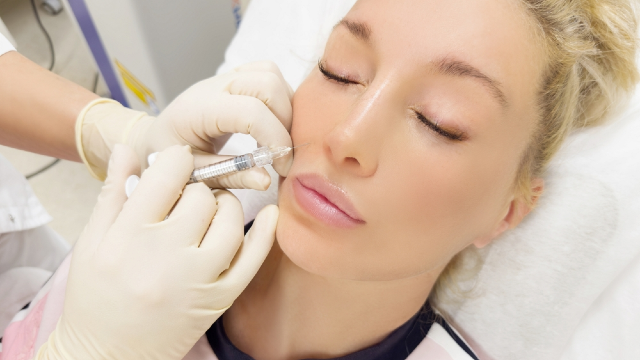
At Plan Me Clinic, dermal filler treatment uses hyaluronic acid-based gel formulations to restore lost volume, soften static wrinkles, and refine facial contours. Dr. Seung-hwan Lee assesses facial structure, skin condition, and the patient's goals before deciding the filler type, the volume, and the injection sites, and the treatment is planned around that assessment rather than a standard injection pattern. Depending on the area, placement is made with fine needles or with a cannula. A session usually runs fifteen to thirty minutes depending on how many areas are treated.
The outcomes the clinic associates with it are all structural: restored cheek contour, softer nasolabial folds and marionette lines, improvement in under-eye hollowing, fuller or more defined lips, better facial balance and symmetry.
Where the line genuinely blurs
Two categories is a useful simplification, not a law of nature, and some products sit deliberately between them.
Juvelook pairs hyaluronic acid with high-molecular-weight PLA, or poly-L-lactic acid, in one formulation. Plan Me Clinic uses it for texture, pores, and acne scarring as well as for facial volume, with Dr. Lee selecting between the skin and volume formulations, or a combination of both, according to the area and the degree of aging. Hydration and texture improvements may appear early while the collagen-related change continues developing over the following weeks, so a single product is doing booster work and filler work on two different timelines.
Even the Skin Glow Injection has a second form. Alongside the pure hyaluronic acid version focused on hydration and clarity, the clinic offers a water glow filler variant that combines hydration with mild volumizing for areas that have gone slightly sunken or depleted.
So the honest framing is not "boosters here, fillers there." Every injectable sits somewhere on a line between changing skin quality and changing shape, and the useful question is where on that line your own concern falls.
Choosing between them, or choosing both
This is where the consultation earns its place.
The FDA's general guidance on aesthetic devices asks patients to do two things before agreeing to any of them: discuss the benefits and the risks with the provider, and establish whether you are a candidate for the procedure at all. It adds a third that is easy to skip — ask about that provider's training and experience with the specific procedure you are considering.
Those questions are only answerable once the category question is settled, which is what makes the distinction in this article practical rather than academic. If your skin is dull and dehydrated but your facial volume is intact, a filler will not fix the complaint you actually have. If your cheeks have flattened, no amount of hydration will replace what is missing. And if both are true, a plan can legitimately include both — a booster course running alongside a filler placement, sequenced rather than stacked into one appointment.
The American Academy of Dermatology's question list is a good companion here. Two of its items translate directly: what results can I realistically expect, and how many treatments will be needed to get there. The answers will differ sharply depending on which side of the booster-filler line your plan sits, and a plan that contains both will have two answers rather than one.
At Plan Me Clinic every consultation is conducted by Dr. Lee personally, and the assessment covers skin condition and facial structure before any product is named. If you want to start that conversation, the clinic's consultation and inquiry page is the route, and its before and after gallery is worth reviewing first so that what you ask for is anchored to something you have actually seen.
The Bottom Line
- A skin booster targets the quality of the skin — hydration, thickness, texture, clarity. A dermal filler targets shape, replacing fullness that has been lost.
- Boosters at Plan Me Clinic include Skin Glow Injection (Mulgwang), which places hyaluronic acid in the dermal layer, and Rejuran Healer, which is directed at firmness and resilience rather than water content.
- Dermal filler at the clinic uses hyaluronic acid gel to restore volume, soften static wrinkles, and refine contours, planned per face rather than by a standard pattern.
- Hybrid products such as Juvelook, and the water glow filler variant of the Skin Glow Injection, sit deliberately between the two categories and do some of each.
- Wanting both is common and reasonable, because they answer different complaints. The consultation is where the sequence gets decided.
Frequently Asked Questions
Can I have a skin booster and a dermal filler in the same treatment plan?
Yes. They address different concerns, so a plan can include both. At Plan Me Clinic the sequence and spacing are decided by Dr. Seung-hwan Lee during the consultation, based on your skin condition and facial structure rather than on a fixed package.
Will a skin booster add volume to my cheeks?
Not in the way a filler does. Boosters are aimed at hydration, thickness, and texture. The one partial exception at Plan Me Clinic is the water glow filler variant of the Skin Glow Injection, which combines hydration with mild volumizing for slightly sunken areas.
Which one works faster?
Fillers, in the sense that the change in shape is placed rather than grown. Boosters are described by the clinic as building through a structured series, with hydration and radiance improving soon after treatment and the fuller effect developing over following weeks.
How long does a filler appointment take?
At Plan Me Clinic a dermal filler session typically takes fifteen to thirty minutes, depending on how many areas are treated. The assessment that precedes it — facial structure, skin condition, goals — is what determines the filler type, the volume, and the injection sites.
Is a hybrid product like Juvelook a booster or a filler?
Both, by design. Its formulation sets poly-L-lactic acid alongside hyaluronic acid, so it works on hydration, texture, pores, and acne scarring while also supporting collagen and, in its volume formulation, restoring facial fullness. Dr. Lee selects the formulation and technique per patient.
What should I ask before agreeing to either one?
The FDA suggests establishing whether you are a candidate, discussing the benefits and risks, and asking about the training and experience of the person performing the procedure. Add one more of your own: ask which of your two concerns — skin quality or lost fullness — the proposed treatment is actually aimed at.
This article is for general informational purposes and does not constitute individualized medical advice. It is not a self-diagnosis tool. Suitability for any injectable treatment depends on your medical history, medications, allergies, and the condition of your skin, and can only be established by a qualified physician or dermatologist during a consultation.
More Articles
Continue reading our clinical guides.