Personalized Medical Care & Dedicated International Patient Concierge

Medical Guide
Onda Lifting vs Mint Thread Lift: Energy or Mechanical
Onda vs thread lift compared: one delivers energy into tissue, one physically repositions it. Downtime, duration and who each non-surgical lift suits.
Schedule a ConsultationOnda Lifting vs Mint Thread Lift: Energy or Mechanical
Medically reviewed by Dr. Seung-hwan Lee, Family Medicine Specialist & Dermatology Doctor, Representative Director, Plan Me Clinic
Searching Onda vs thread lift turns up a lot of before-and-after photos and very little about the thing that actually separates them. One of these treatments delivers energy into tissue and waits for the body to respond. The other places a material under the skin and moves the tissue now. Both are non-surgical, both are offered at Plan Me Clinic in Seoul, and they suit different faces at different stages — which is a more useful frame than asking which one wins.
Energy versus mechanical: the real division
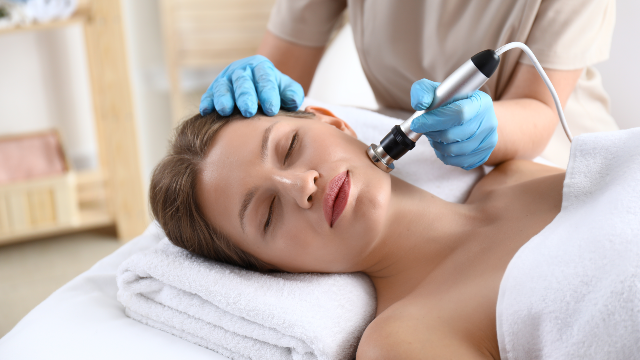
Onda Lifting is a device treatment. Plan Me Clinic's account: microwave energy is used to support collagen remodeling, without surgery, tightening the skin over time. It arrives through a patented ergonomic handpiece, with strong contact cooling guarding the surface, and the treatment is comfortable enough to run without anesthesia.
Mint Thread Lifting is a mechanical treatment. An absorbable PDO thread carrying larger, more pronounced barbs is placed under the skin, where it draws sagging tissue upward, eases deep wrinkles and improves elasticity across the face. The thread gradually dissolves, leaving no permanent foreign material behind.
That is the division. One treatment changes the quality of the tissue over time. The other repositions the tissue and holds it. If your complaint is that your skin has lost firmness, the first is the natural candidate. If your complaint is that a specific structure has dropped, the second is.
Why sagging is a structural problem, not just a skin one
Both treatments are responding to the same underlying change, approached from different directions.
MedlinePlus, the National Library of Medicine's patient-facing encyclopedia, describes elastosis: connective tissue changes such that skin holds less strength and springs back less. Alongside it, the outer layer grows thinner and so does the fat layer underneath. It names sun exposure as the single greatest contributor to those changes.
The National Library of Medicine's StatPearls chapter on the neck adds a structural detail relevant to anyone whose concern reaches the jawline. The superficial layer just beneath the skin runs from the head down toward the chest and is arranged loosely, specifically so that the neck can move; the platysma, a thin muscle, extends from the upper thorax up to the cheek and lower lip. Mobile tissue on a loose foundation is exactly the tissue that eventually descends.
Who each one is described for
Onda Lifting, per the clinic, is aimed at slack skin and early wrinkling where the patient wants tightening without surgery. It also names people put off by how uncomfortable heat-based treatments have felt, people whose skin is thin or heat-sensitive, people wanting contour improvement on the face or on the arms, thighs or abdomen, and people who want little downtime while collagen remodeling proceeds.
Two things stand out there. It is not limited to the face. And it is specifically positioned for people who have been put off by how uncomfortable other heat-based lifting treatments were — the clinic notes it may be more comfortable for patients worried about pain from laser or other heat-based lifting procedures, and describes it as a step beyond conventional radiofrequency or ultrasound-based approaches.
Mint Thread Lifting, per the clinic, is for faces where elasticity has gone and specific structures have moved: a jawline that has softened, cheeks or under-eye areas that have dropped, folds beside the nose that have deepened, a double chin that has become noticeable, or a wish for a more defined V-line contour without invasive surgery. The clinic is explicit that patients should have realistic expectations, because the effect gradually diminishes as the thread is absorbed.
Notice how much more specific that list is. Threads are aimed at named structures that have moved. The energy treatment is aimed at a property of the skin.
What each appointment is like
The difference in the treatments shows up most clearly in the anesthesia.
Onda Lifting requires minimal preparation precisely because anesthesia is not needed. The sequence is consultation and skin assessment, a customized plan, then delivery of the energy through the handpiece while the skin surface is protected, then immediate aftercare — with daily activities generally resumed straight away. Downtime is minimal. According to the clinic, significant side effects are minimal or absent for most people, and it characterizes the overall safety picture as favorable — while noting that responses differ from person to person.
Mint Thread Lifting begins with a personal facial assessment, then local anesthesia is administered to the treatment area. The barbed thread is placed beneath the skin to lift the targeted areas, aftercare and precautions are explained, and calming or soothing care is applied immediately afterward. Most patients return to daily activities shortly after.
Local anesthetic in one case and none in the other is not a trivial detail. It is a reasonable proxy for how invasive each treatment is.
Dr. Seung-hwan Lee performs the assessment for both — evaluating skin thickness, laxity and goals for the energy treatment, and the degree of facial sagging, skin elasticity and goals for the thread treatment, then determining placement and technique.
You can raise which route fits your findings through the clinic's contact page, and the before-and-after gallery is the place to see what each looks like in practice.
How the results arrive, and how long they stay
Onda Lifting: the clinic reports an immediate tightening effect, with firmness improving progressively as collagen remodeling continues. Reported improvements include firmer skin, smoother texture and a more contoured appearance in treated areas, varying with skin laxity, thickness and the area treated. Follow-up and maintenance may involve further sessions as remodeling continues.
Mint Thread Lifting: the clinic describes the lifting effect as relatively fast and noticeable following treatment, generally sustained for around a year or two, after which the absorbable thread dissolves and the effect diminishes. Maintenance treatment may be considered as it fades.
So the thread gives you a defined result now with a defined lifespan. The energy treatment gives you a smaller immediate change that keeps improving, and a schedule rather than an expiry date.
For an outside view of what the energy is doing, the FDA's consumer material on non-surgical tightening and contouring devices is useful: it describes gentle heating applied without burning the skin as being thought to trigger the skin to produce collagen and give a tighter appearance, and notes that such procedures may make skin feel or look tighter through a degree of shrinking as well as added collagen.
Risk profiles are not comparable, and that is the point
This is where the two treatments diverge most sharply, and where an honest comparison earns its keep.
Mint Thread Lifting carries the longer list. The clinic reports possible temporary swelling, bruising, pain or tenderness, tightness, skin dimpling, contour irregularities and temporary numbness or altered sensation. Less common complications may include infection, bleeding or hematoma, visible or palpable threads, inflammatory reactions, nerve or gland injury, and asymmetry. Most reported effects are temporary, but some complications may need further treatment or removal of the thread.
Onda Lifting carries a shorter effects list but a longer exclusion list. The clinic states that it may not be suitable for people who are pregnant or breastfeeding; who have a pacemaker or other implanted electronic device; who have serious heart or blood-vessel disease; who have cancer now or have had certain cancers recently; who have a significant clotting disorder, impaired kidney or liver function, or diabetes that is not controlled; or who have an active infection or skin condition in the treatment area. It may also be unsuitable over areas containing permanent metal or other implants, open wounds, reduced sensation, or certain vascular or inflammatory conditions.
The FDA's device guidance echoes several of those. For energy-based devices it lists active implants such as a pacemaker or implanted cardioverter defibrillator, and metal beneath the skin from an implant or injury, among the reasons not to proceed, and it asks patients to speak up about blood-thinning medication, a suppressed immune system, any clotting or bleeding disorder, diabetes that is not under control, an active infection of the skin, a personal or family history of keloid scarring, and any cancer treatment now or recently.
Whichever route is on the table, a qualified clinician makes the final call on suitability once they have gone through your history, looked at the area, and weighed your particular circumstances.
Choosing, practically
The American Academy of Dermatology publishes a checklist for exactly this situation, and it is the most useful thing to take into a consultation where two options are on the table.
Start with yourself, it advises: be clear about what you want out of the procedure, and be honest about how much recovery time and risk you are willing to accept. Then put two questions to the doctor: how many of these exact procedures have they carried out, and how regularly do they treat people who share your skin tone, skin type and age? Experience with patients like you makes the result you expect more likely.
Then turn to the procedure. Which options could address your concern at all? Is this one the right fit for you? What result is realistic, and what could go wrong? How long does it take, how many treatments will you need, and will you be numbed? What does recovery normally involve, and what should you be doing beforehand and afterward for your skin? Last, ask the doctor to show you their own patients' before-and-after photographs, ideally people whose skin resembles yours.
With two treatments this different, those questions do most of the deciding for you.
What both treatments still depend on
Neither route removes the need for the basics, and the American Academy of Dermatology's guidance is short.
Wear broad-spectrum sunscreen of SPF 30 or higher every day on skin your clothing does not cover, since ultraviolet exposure accelerates wrinkles and other signs of aging. Skip tanning, whether from the sun or a bed. Moisturize, which holds water in the skin and can soften the appearance of some fine lines. Avoid layering several anti-aging products at once, because irritated skin makes aging more noticeable, and stop anything that stings or burns unless a dermatologist prescribed it. And give any product at least six weeks — sometimes three months — before judging it.
The Bottom Line
- Onda Lifting delivers microwave energy and relies on collagen remodeling over time; Mint Thread Lifting places an absorbable barbed thread that repositions tissue mechanically.
- Loss of firmness points toward the energy route; a specific structure that has visibly dropped points toward the thread route.
- Onda Lifting is performed without anesthesia; the thread treatment uses local anesthesia — a fair proxy for how invasive each is.
- Thread results are relatively fast and last around a year or two before the thread absorbs; the energy treatment improves progressively and runs on a maintenance schedule.
- The thread route has the longer complication list; the energy route has the longer list of people who should not have it, including anyone with an implanted electronic device.
Frequently Asked Questions
What is the fundamental difference between the two?
Onda Lifting uses microwave energy to support collagen remodeling over time. Mint Thread Lifting places an absorbable PDO thread with pronounced barbs beneath the skin to lift sagging tissue directly. One changes tissue quality; the other repositions tissue.
Which one is used for a sagging jawline or double chin?
Plan Me Clinic points thread lifting at exactly those findings — a softened jawline, cheeks or under-eye areas that have dropped, deepened folds beside the nose, a visible double chin, or a wish for a more defined V-line contour.
Do either require anesthesia?
Onda Lifting requires minimal preparation because it can be performed comfortably without anesthesia. Mint Thread Lifting uses local anesthesia in the treatment area, with calming care applied immediately afterward.
How long do the results last?
The clinic describes the thread lift effect as generally sustained for around a year or two, after which the thread dissolves and the effect diminishes. For Onda Lifting it describes an immediate tightening effect with progressive improvement as collagen remodeling continues, and maintenance sessions as appropriate.
Can Onda Lifting be used on the body?
Yes. The clinic lists facial or body contour improvement in areas such as the arms, thighs and abdomen among the reasons patients are considered for it.
Who should not have Onda Lifting?
The clinic rules it out in pregnancy and breastfeeding, and for anyone with a pacemaker or similar implanted electronic device. Also on the list: serious heart or blood-vessel disease, current or certain recent cancers, significant clotting disorders, impaired kidney or liver function, uncontrolled diabetes, and any active infection or skin condition where treatment would go.
What complications are specific to the thread route?
The clinic reports temporary swelling, bruising, pain, tightness, skin dimpling, contour irregularities and altered sensation, with less common complications including infection, bleeding, visible or palpable threads, inflammatory reactions, nerve or gland injury and asymmetry. Some may require further treatment.
What should I ask at the consultation?
The American Academy of Dermatology points to a short list: the doctor's track record with this particular procedure and with patients like you, what result is realistic, what could go wrong, the number of treatments involved, whether numbing is used, and what recovery normally involves.
This article is for general informational purposes and does not constitute individualized medical advice. It is not a self-diagnosis tool. Discuss your medical history, current medications, implanted devices and treatment goals with a qualified dermatologist in person before considering any lifting procedure, and follow the guidance you are given.
More Articles
Continue reading our clinical guides.