Personalized Medical Care & Dedicated International Patient Concierge

Medical Guide
Mint Thread Lift in Korea: What to Know Beforehand
Mint thread lift Korea explained for US patients: how barbed PDO threads lift tissue, scalp anchoring, the one-to-two-year timeline, and the complication list.
Schedule a ConsultationMint Thread Lift in Korea: What to Know Beforehand
Medically reviewed by Dr. Seung-hwan Lee, Family Medicine Specialist & Dermatology Doctor, Representative Director, Plan Me Clinic
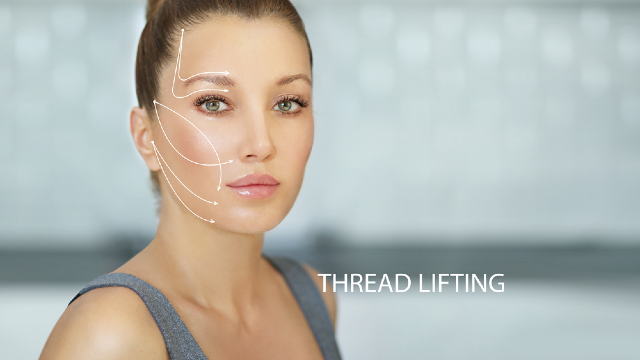
A Mint thread lift Korea consultation covers two things that most online summaries of PDO thread lifting in Seoul leave out: what the thread is anchored to, and what happens as it dissolves. Both are central to whether the result will match what you are picturing. At Plan Me Clinic, Mint Thread Lifting is a non-surgical thread-lifting procedure using a specially molded, absorbable barbed PDO thread inserted beneath the skin to lift sagging tissue, soften deep wrinkles and improve facial elasticity, with the thread gradually dissolving over time and leaving no permanent foreign material behind.
What PDO is, and what "absorbable" commits you to
PDO stands for polydioxanone. It is not a novel aesthetic material — it is an established surgical one.
NCBI Bookshelf's StatPearls chapter on sutures and needles classifies suture materials along several axes, the first of which is absorbable versus non-absorbable, and lists polydioxanone among the synthetic sutures surgeons select for repairs where absorption is wanted. That surgical pedigree is the reassuring part.
The consequence is the part to plan around. An absorbable thread does its work and then goes away. Plan Me Clinic is direct about this: results are generally sustained for approximately one to two years, after which the absorbable thread gradually dissolves and the effect diminishes. Maintenance treatment may be considered as the effect decreases, and the clinic states patients should hold realistic expectations precisely because results fade as the thread is absorbed.
So the honest way to think about a thread lift is as a treatment with a defined lifespan rather than a permanent structural change.
The molding, and why thread quality is not a detail
Plan Me Clinic uses a specially molded, absorbable PDO thread with larger, more pronounced barbs. The clinic states that the molding process gives the thread consistent thickness and greater resistance to breaking than conventional thread-lifting products.
Two properties are being described, and they are related. The barbs are what grip tissue and carry the lift. Consistent thickness along the thread's length is what stops the grip from concentrating stress at a thin point. A thread that breaks under tension does not deliver a partial lift; it delivers an asymmetric one.
The thread is described as designed to provide strong traction and holding power, which is the mechanical property the whole procedure depends on.
Anchoring at the scalp: what the thread is pulling against
This is where thread lifting stops being an injection and becomes a repositioning procedure.
Plan Me Clinic anchors the threads to lift targeted tissues, with fixation at the scalp described as providing strong anchoring. Any lift requires two points: something being moved, and something fixed to move it toward.
The anatomy underneath explains why the scalp is a sensible fixed point. NCBI Bookshelf's StatPearls chapter on the temporoparietal fascia describes it as a thin connective tissue layer sitting beneath the skin and subcutaneous tissue over the temporal fossa. A fibrous sheet of that kind gives an anchor something to hold against, which loose subcutaneous tissue would not.
The tissue being repositioned has structure of its own. NCBI Bookshelf's chapter on the superficial musculoaponeurotic system describes the SMAS as an organized fibrous network made up of the platysma muscle, the parotid fascia and the fibromuscular layer covering the cheek. That network is the reason a thread can lift a region of the face rather than only tent the skin above it.
The muscle layer matters too. NCBI Bookshelf's chapter on the facial muscles points out that the muscles of facial expression are unusual in originating from bone and inserting into the dermis, which is what lets them move skin and soft tissue directly. Threads are placed within an already mobile system, not a static one.
Who the procedure suits
Plan Me Clinic lists suitable candidates as people with:
- Reduced facial elasticity
- A sagging jawline
- Drooping cheeks or under-eye areas
- Deepened nasolabial folds
- A noticeable double chin
- A wish for a more defined contour without invasive surgery
Realistic expectations are named as part of candidacy rather than as a caveat, given that the effect diminishes as the thread absorbs.
The consultation and the procedure
The consultation begins with a personal facial assessment by Dr. Seung-hwan Lee. He evaluates the degree of facial sagging, skin elasticity and your treatment goals before determining thread placement and technique.
The procedure then runs:
- Personal consultation and facial assessment
- Local anesthesia administered to the treatment area
- The specially molded barbed thread inserted beneath the skin and anchored to lift the targeted areas
- Aftercare and precaution guidance
- Calming or soothing care applied after treatment
- A return to daily activities shortly afterward for most people
The treatment itself typically takes about 30 minutes. Local anesthesia is used for comfort during the procedure, and immediate soothing care follows to help with early discomfort or swelling. Downtime is described as minimal, and the lifting effect is described as relatively fast and noticeable after treatment.
The complication list, in full
Plan Me Clinic publishes a detailed list, and reading it is the single most useful preparation you can do.
Possible side effects:
- Temporary swelling
- Bruising
- Pain or tenderness
- Tightness
- Skin dimpling
- Contour irregularities
- Temporary numbness or altered sensation
Less common complications:
- Infection
- Bleeding or hematoma
- Visible or palpable threads
- Thread migration or extrusion
- Inflammatory reactions
- Nerve or gland injury
- Asymmetry
Most reported side effects are temporary, but the clinic states plainly that some complications may require additional treatment or removal of the thread. That last clause is the one to register before consenting. A thread lift is reversible in a way surgery is not, but reversal is a further procedure rather than a simple undo.
Results vary according to skin laxity, skin thickness and the treated area, and are not expected to be identical for every patient.
Compared with a surgical facelift
Plan Me Clinic offers Mint Thread Lifting as a non-surgical alternative to a facelift, contrasting its roughly 30-minute treatment time and minimal downtime with the pain and extended recovery associated with surgical facelift procedures.
It is worth understanding what the surgical operation actually does, because it clarifies what a thread lift is not. NCBI Bookshelf's StatPearls chapter on cervicofacial rhytidectomy describes facelifting and necklifting as a cornerstone surgical procedure for facial aging, performed to rejuvenate the face by resuspending soft tissues that have descended. The same chapter states that rhytidectomy repositions soft tissues which have descended over time and reduces excess skin, and notes that facial aging produces characteristic hollowing in the temporal, perioral, pre-jowl and malar regions.
The key difference is in that phrase about excess skin. A surgical lift can remove tissue. A thread lift repositions what is there. If skin redundancy rather than descent is the dominant feature of what is bothering you, that distinction will shape which option is realistic — and it is a question for an in-person assessment, not a website.
What to bring to the treatment-history conversation
The assessment Dr. Seung-hwan Lee performs looks at sagging, elasticity and goals, but there is information only you can supply, and it changes the plan.
Prior injectable or lifting treatment in the same region is the obvious example. So is anything that has previously affected sensation or healing in the face. Because thread placement is planned around where tissue can be gripped and where it can be anchored, a history of procedures in those planes is directly relevant to technique selection rather than a formality.
The same applies to what you want the result to look like. Plan Me Clinic describes realistic outcomes for this procedure as a lifted and firmer facial contour, improved skin elasticity, softened nasolabial folds, reduced jawline sagging and a more defined contour. That is a specific set of changes. If your expectation is closer to what surgery achieves, the useful outcome of the consultation may be being told so.
The clinic's stated treatment principle supports that kind of conversation: it recommends only treatments considered medically necessary rather than selecting by price or by procedure volume, and applies a double-check after treatment as part of continuing care. For a procedure whose complication list includes asymmetry and palpable threads, a follow-up review built into the plan is worth more than a lower barrier to booking.
Where Plan Me Clinic stands
The clinic has run from one Gangnam address since 2014, on the 7th floor of Apex Tower. For thread lifting, its method is placement chosen by a physician once sagging, elasticity and goals have been assessed, in place of a fixed package. A review of the result after treatment — the clinic's double-check step — is built into that care rather than offered on request.
Photographic records of past cases sit in the before-and-after gallery. Questions and appointment requests go to the contact page, and a remote consultation can precede any visit in person.
The Bottom Line
- Mint Thread Lifting uses a specially molded absorbable barbed PDO thread; NCBI Bookshelf lists polydioxanone among the established synthetic absorbable suture materials.
- The lift is anchored with fixation at the scalp, where NCBI Bookshelf describes the temporoparietal fascia as a thin connective tissue layer beneath the skin over the temporal fossa — a fibrous sheet an anchor can hold against.
- Treatment takes about 30 minutes under local anesthesia, with minimal downtime and a relatively fast, noticeable lifting effect.
- The effect is generally sustained for approximately one to two years, then diminishes as the thread absorbs; maintenance may be considered at that point.
- Read the complication list before consenting: swelling, bruising, tenderness, tightness, dimpling, contour irregularity and numbness are listed as possible, with infection, hematoma, visible or migrating threads, nerve or gland injury and asymmetry less common — and some may require further treatment or thread removal.
Frequently Asked Questions
Who is a good candidate for Mint Thread Lifting?
Plan Me Clinic lists people with reduced facial elasticity, a sagging jawline, drooping cheeks or under-eye areas, deepened nasolabial folds or a noticeable double chin, and those who want a more defined contour without invasive surgery.
How long does the procedure take?
The treatment itself typically takes about 30 minutes, following a consultation and facial assessment.
What anesthesia is used?
Local anesthesia is administered to the treatment area for comfort during the procedure. Calming or soothing care is applied immediately afterward.
How long do the results last?
Results are generally sustained for approximately one to two years. After that the absorbable thread gradually dissolves and the lifting effect diminishes, at which point maintenance treatment may be considered.
What is the recovery like?
Downtime is described as minimal, with most people able to resume daily activities shortly after treatment. Some immediate discomfort or swelling is expected, and soothing care is applied to help with it.
What complications should I know about?
Temporary swelling, bruising, tenderness, tightness, dimpling, contour irregularity and altered sensation are listed as possible. Less common complications include infection, bleeding or hematoma, visible or palpable threads, thread migration or extrusion, inflammatory reactions, nerve or gland injury and asymmetry — and some may need additional treatment or thread removal.
How does the clinic reduce risk?
Through individualized facial assessment and physician-led planning. Dr. Seung-hwan Lee evaluates facial sagging, skin elasticity and treatment goals before determining thread placement and technique.
How does this differ from a surgical facelift?
Plan Me Clinic positions it as a non-surgical alternative, with a roughly 30-minute treatment and minimal downtime rather than the pain and extended recovery associated with surgical facelifting. The underlying difference is that a thread lift repositions tissue rather than removing excess skin.
This article is for general informational purposes and does not constitute individualized medical advice. It is not a self-diagnosis tool. Discuss your facial anatomy, medical history and expectations with a qualified dermatologist in person before considering a thread-lifting procedure, and follow the guidance you are given.
More Articles
Continue reading our clinical guides.