Personalized Medical Care & Dedicated International Patient Concierge

Medical Guide
Laser Hair Removal in Korea: Planning a Multi-Session Course
Laser hair removal Korea for tourists: why a course takes months, how many sessions to expect, and how to plan a realistic protocol around one trip.
Schedule a ConsultationLaser Hair Removal in Korea: Planning a Multi-Session Course
Medically reviewed by Dr. Seung-hwan Lee, Family Medicine Specialist & Dermatology Doctor, Representative Director, Plan Me Clinic
Anyone researching laser hair removal Korea for tourists runs into the same collision: the treatment works as a course spread over months, and most visitors have a week. That is a scheduling problem, not a reason to skip it — but it is a problem you have to solve before you book, not while you are standing at the clinic desk. At Plan Me Clinic in Seoul, laser hair removal is performed by the doctor, with settings set to your skin and hair, and it follows the same biological timetable everywhere in the world.
Why the hair cycle sets the schedule
Hair does not grow continuously. It passes through growth, regression and resting phases, and only some of your hair is in the active growth phase at any given moment.
That is the entire reason for multiple sessions. The National Library of Medicine's StatPearls chapter on laser hair removal states the mechanism plainly: the hair matrix is only sensitive to laser treatment during the anagen — actively growing — phase, so repeat treatments are needed to catch every follicle at the point when it can respond.
StatPearls also explains what the laser is doing. These systems work on a principle called selective photothermolysis: light of a specific wavelength is absorbed preferentially by a target within the tissue, in this case the melanin concentrated in the hair shaft and matrix. Because melanin content is far higher in those structures than in the surrounding follicle, the melanin captures the energy and distributes it outward, damaging the hair matrix and the stem cells in the hair bulge.
Plan Me Clinic describes the same process from the patient's side: the treatment selectively targets melanin in the hair shaft so the laser can act on the follicle and root while limiting effects on surrounding skin.
What the clinic uses, and why the gel matters
Plan Me Clinic uses a long-pulse 755nm laser. Two practical properties follow. It does not require gel, and the clinic describes it as causing less discomfort than conventional diode lasers, which is why most sessions can be performed without anesthesia.
StatPearls lists the alexandrite laser at that same wavelength among the standard hair-reduction devices, noting its greater penetrance. It sets out the full family for comparison — ruby at 694 nm, alexandrite, diode at 810 nm with deeper penetration and better fluence, Nd:YAG at 1064 nm with better penetration and relatively less absorption by melanin, and intense pulsed light systems spanning roughly 500 to 1200 nm, which cover larger areas but are described as less effective than a true laser.
Which of those suits you is not a preference question. StatPearls is explicit that selecting the right laser with the right parameters, individualized to the patient, matters most in people with intrinsically dark skin, and that most complications are preventable when fluence, spot size, wavelength and cooling are adjusted properly.
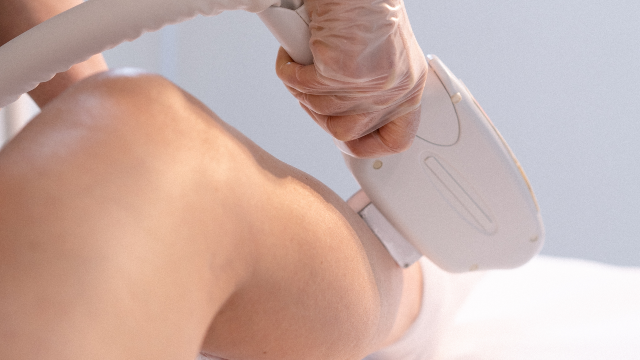
That is exactly the step Plan Me Clinic performs at the start. Dr. Seung-hwan Lee assesses skin tone, hair density and treatment area, then calibrates the laser settings accordingly. The clinic emphasizes physician-performed rather than technician-led treatment, with the stated focus on low pain, individualized settings, privacy and consistent results.
Fitzpatrick typing, in plain terms
The classification behind "skin type" is the Fitzpatrick scale, which StatPearls summarizes as six categories running from pale white skin that always burns and never tans, through fair skin that burns easily and tans poorly, darker white skin that tans after an initial burn, light brown skin that burns minimally, brown skin that rarely burns, to dark brown or black skin that never burns.
StatPearls notes that outcomes have historically been best where there is little melanin in the skin and plenty in the hair — light skin with dark hair. The American Academy of Dermatology adds the modern qualifier: laser hair removal used to be limited to people with dark hair and light skin, and it is now an option across a much wider range including light hair with light skin and dark skin, provided it is carried out carefully by someone who knows which precautions each skin type requires.
How many sessions, and how far apart
Here the numbers matter, and different authorities frame them slightly differently — which is useful rather than confusing.
Plan Me Clinic's protocol spaces sessions about one month apart, with a full course typically involving five or more sessions.
StatPearls describes an initial phase of four to six sessions spaced four to six weeks apart as the minimum needed for adequate results, followed by maintenance treatments roughly every six to twelve months as fine vellus hair regrows.
The American Academy of Dermatology reports that most patients need two to six laser treatments to remove the hair, that most can be treated once every four to six weeks, and that after finishing a course most people see no hair on the treated skin for several months or even years — with regrowth, when it comes, tending to be sparser, finer and lighter.
The Academy also sets a concrete first-session expectation: around a 10% to 25% reduction in hair after one treatment. That single figure is the most useful thing a visiting patient can carry into a trip, because it tells you what one session on holiday will and will not deliver.
Planning a course around a trip
Put those two facts side by side — sessions roughly a month apart, and a course of five or more — and a single visit cannot complete a course. What a single visit can do is start one properly, on correctly chosen settings, with a record of the parameters used.
Three things make that worth doing:
- The assessment travels with you. A documented skin-tone and hair-density assessment, and the settings used, is information any subsequent provider can work from.
- Smaller areas fit a short trip. Sessions for smaller areas generally take 5 to 10 minutes at Plan Me Clinic. Full-body treatment and larger areas such as the legs or back need longer.
- The interval is the constraint, not the clinic. Whether the next session happens in Seoul or at home, it is the four-to-six-week window that governs.
The most common planning error is expecting a compressed course. Treatments cannot be stacked within days to make up for a short stay; the follicles you would be treating are not in a phase where they respond.
If you want to sort out the assessment and timing before you fly, the clinic's contact page is the place to raise it, and its patient reviews describe how others found the visit.
Who should not book without a further conversation
Plan Me Clinic's list of exclusions and cautions is specific, and worth reading before you make travel plans.
Treatment may not be suitable if you are pregnant, have an active infection or significant skin irritation in the treatment area, or have certain photosensitive skin conditions. Additional assessment or a modified plan may be needed if you have a history of keloid or abnormal scarring, vitiligo, psoriasis, recent tanning or significant sun exposure, or a history of herpes outbreaks. Some photosensitizing medications also affect suitability. The clinic does not treat over tattoos, or in areas where treatment could put the eyes at risk, such as the eyelids and eyebrows. Final suitability is determined by the treating clinician.
Recent sun exposure is the one that catches travelers out. If your trip includes beach days before your appointment, say so.
Side effects, and the ones that matter
Plan Me Clinic reports that treatment may cause temporary redness, swelling, warmth, itching, tenderness or discomfort, generally improving within a few days. Less common complications may include blistering or superficial burns, changes in skin color in either direction, infection and, rarely, scarring. Paradoxical hair growth — increased growth of fine or darker hair in or near the treated area — has also been reported. The clinic notes that risk varies with skin type, hair characteristics, device, settings and individual response, and that eye protection and a qualified operator are important for safety.
The independent picture lines up. StatPearls lists redness, pain and burning as common effects, with blistering, crusting, purpura, uneven skin coloring and sometimes scarring as more severe ones, plus ocular injury from accidental exposure and rare paradoxical hypertrichosis, more often in mid-range skin types and with intense pulsed light systems.
The American Academy of Dermatology says the most common effects — discomfort, swelling and redness — are minor and last one to three days, and reports that other effects are rare when treatment is performed by a dermatologist or under direct supervision. It is direct about the stakes: in inexperienced hands, burns, permanent changes in skin color and scars can occur, and the way to reduce that risk substantially is to be treated by a doctor with deep laser skill and detailed knowledge of skin. Some color changes settle over time; some are permanent.
The U.S. Food and Drug Administration's overview of medical lasers frames the general risk profile the same way, listing incomplete treatment, pain, infection, bleeding, scarring and skin color changes among the risks of laser procedures, and noting that laser treatment uses non-ionizing radiation and so does not carry the long-term risks associated with x-rays.
What the appointment feels like
The Academy's description is useful because it is unglamorous. The area is cleansed; some patients receive a numbing gel, which takes about 30 to 60 minutes to work and is most useful on small, sensitive areas. Everyone in the room wears protective eyewear. The skin is held taut and treated. Most people describe the pulses as warm pinpricks, or a rubber band snapped against the skin. There is a faint sulfur-like smell, because the laser vaporizes the hair.
At Plan Me Clinic, the long-pulse device needs no gel and most patients need no anesthetic. Same-day showering and light makeup are generally allowed; saunas and steam rooms should be avoided. Mild redness may persist for a day or two, and most people resume normal activities immediately.
Between sessions, sun protection is the treatment
Every source here converges on one instruction, and it is the one most people ignore.
Plan Me Clinic advises consistent sunscreen between sessions, plus moisturizer on larger treated areas, since repeated sessions can leave skin dry. StatPearls calls strict sun protection and sunscreen use a must after treatment, and notes that sunscreens may be prescribed four to six weeks beforehand, especially on exposed areas. It also advises avoiding plucking and waxing for six weeks before a session, since those remove the very target the laser needs.
The American Academy of Dermatology says to keep direct sunlight off treated skin and to stay out of tanning beds and lamps entirely, and its wider skin guidance puts the daily standard at a broad-spectrum product of at least SPF 30 wherever clothing does not cover you. MedlinePlus, the encyclopedia published by the U.S. National Library of Medicine for patients, gives the underlying reason: sun exposure is the single greatest contributor to the skin changes people are trying to avoid.
The Bottom Line
- Laser hair removal is a course, not an appointment, because only hair in its active growth phase responds — StatPearls is explicit on this point.
- Plan Me Clinic's protocol is five or more sessions spaced about a month apart; StatPearls describes four to six sessions at four-to-six-week intervals as a minimum, and the American Academy of Dermatology reports two to six treatments for most patients.
- Expect roughly 10% to 25% hair reduction after the first session, per the Academy — a single trip starts a course rather than finishing one.
- Dr. Seung-hwan Lee sets the parameters to your skin tone, hair density and treatment area; that calibration is what separates a safe result from a burn.
- Recent tanning, photosensitizing medication, tattoos in the area and a history of abnormal scarring all change the plan, so raise them before you travel.
Frequently Asked Questions
How many sessions will I actually need?
Plan Me Clinic describes a full course as typically five or more sessions. The American Academy of Dermatology reports that most patients need two to six treatments, and StatPearls describes four to six sessions as the minimum initial phase. Your hair color, thickness, skin tone and treatment area all affect the number.
How long do I have to wait between sessions?
Plan Me Clinic spaces sessions about one month apart. The American Academy of Dermatology says most patients can be treated once every four to six weeks, and your treating doctor confirms when the next session is appropriate.
Can I finish a whole course during one trip to Korea?
No — the interval between sessions is set by the hair growth cycle, not by scheduling. A single visit starts a course on properly calibrated settings; the remaining sessions follow the four-to-six-week rhythm wherever you have them.
How long does one session take?
Smaller treatment areas generally take 5 to 10 minutes at Plan Me Clinic. Full-body treatment and larger areas such as the legs or back take longer.
Does it need numbing?
Most sessions are performed without anesthesia. The long-pulse device the clinic uses needs no gel and is described as causing less discomfort than conventional diode lasers.
What can I do the same day?
Same-day showering and light makeup are generally allowed. Saunas, steam rooms and other heat-intensive environments should be avoided, and mild redness may remain for a day or two.
Does it work on my skin tone?
The American Academy of Dermatology reports that laser hair removal is now an option across a much wider range of skin tones than in the past, including light hair with light skin and dark skin, when performed carefully with the right precautions. Dr. Seung-hwan Lee assesses your skin tone and hair density and calibrates the settings before treatment.
What should I do about sun exposure?
Keep direct sun off treated skin and avoid tanning beds entirely. Plan Me Clinic advises consistent sunscreen between sessions and moisturizer on larger treated areas, since repeated sessions can leave skin dry.
This article is for general informational purposes and does not constitute individualized medical advice. It is not a self-diagnosis tool. Discuss your medical history, current medications, skin conditions and recent sun exposure with a qualified dermatologist in person before considering laser hair removal, and follow the guidance you are given.
More Articles
Continue reading our clinical guides.