Personalized Medical Care & Dedicated International Patient Concierge

Medical Guide
Dark Circle Filler in Korea: Correcting Under-Eye Hollows
Dark circle filler Korea explained: why shadow-type dark circles differ from pigment, what tear-trough filler corrects, and the questions to ask first.
Schedule a ConsultationDark Circle Filler in Korea: Correcting Under-Eye Hollows
Medically reviewed by Dr. Seung-hwan Lee, Family Medicine Specialist & Dermatology Doctor, Representative Director, Plan Me Clinic
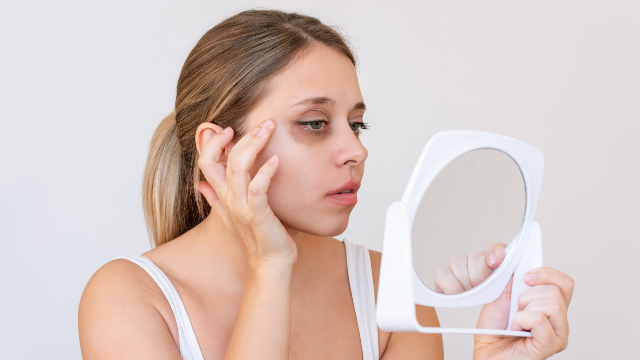
The single most useful question about dark circle filler Korea clinics offer is one most people never ask: are your dark circles actually dark? Some under-eye darkness is pigment sitting in the skin. Some is a shadow cast by a hollow. Only the second kind responds to filler, and at Plan Me Clinic in Seoul the assessment that separates the two happens before any needle is prepared. Dark Circle Filler there is a non-surgical treatment for under-eye darkness caused primarily by hollowing in the tear-trough area.
Shadow or pigment: the distinction that decides everything
A hollow does not have a color. It has a depth, and light falling across the face fails to reach the bottom of it. The result reads to the eye as a dark half-moon, and no amount of brightening will change it, because there is nothing there to brighten.
Plan Me Clinic frames the treatment around exactly that difference. Dark Circle Filler is aimed at hollow-related dark circles caused by structural volume loss; the clinic states plainly that it works by reducing the shadow that hollowing creates rather than by lightening excess pigment. US patients who come to it tend to be the ones who have noticed that their under-eye darkness looks shadow-like rather than pigmented.
That is why the first step is diagnostic, not technical. Dr. Seung-hwan Lee evaluates your under-eye anatomy and determines whether hollowing is the primary factor behind the darkness before any treatment plan is developed.
Why a groove forms there and nowhere else
The under-eye region has a structural quirk that explains both the problem and the difficulty of treating it.
StatPearls, the clinical reference published on the National Library of Medicine's Bookshelf, describes eyelid skin as the thinnest in the body, with only scant subcutaneous tissue beneath it, transitioning to thicker skin as it moves down onto the cheek. It also explains what creates the groove: medially, the nasojugal groove — the tear trough — runs from the inner corner of the eye toward the mid-pupillary line, and exists because the palpebral part of the orbicularis muscle attaches densely to the maxilla, the bone beneath.
The same reference describes how aging deepens it. Two convexities develop with a sulcus between them. The upper one comes from orbital fat pushing forward as its supporting structures weaken. The lower one comes from the descent of malar fat combined with volume loss, which the literature calls skeletonization of the inferior orbital rim — the bony edge becoming more visually prominent as the tissue around it changes. That inferior displacement of subcutaneous fat is attributed to age-related atrophy and gravity.
Add the background changes MedlinePlus, the encyclopedia the U.S. National Library of Medicine publishes for patients, describes in aging skin — thinning of the outer layer, reduced strength and elasticity in connective tissue, and a thinning subcutaneous fat layer — and the under-eye area becomes the first place on the face where a small structural loss shows.
What conservative placement means here
Plan Me Clinic uses a hyaluronic acid-based filler injected in small amounts into the hollowed under-eye area. The word doing the work in that sentence is small.
The clinic's technique is described as conservative and anatomy-based, with low-volume placement chosen precisely because the skin in this region is so thin and delicate. Depending on your anatomy, the plan may address the tear trough, the mid and outer under-eye area, or the cheek-eyelid junction, with the goal of creating a smoother transition between the lower eyelid and the cheek rather than filling a line.
Restraint is not caution for its own sake. StatPearls notes that bluish discoloration under thin skin is the classic sign that hyaluronic acid filler has been placed too superficially — and that this is one of the situations where hyaluronidase, an enzyme that breaks down both natural and injected hyaluronic acid, is particularly useful, since it makes the effect reversible.
Plan Me Clinic lists the same appearance among the possible complications of this treatment, alongside visible lumps, asymmetry and, rarely, more significant adverse reactions. Knowing that a competent injector can reverse an over-superficial result is one of the more reassuring facts in aesthetic medicine, and it is worth raising at consultation.
Who tends to be a candidate
Plan Me Clinic describes potential candidates as adults roughly in their 20s to 50s with:
- Under-eye hollowing, including a naturally deep tear trough
- Dark circles that appear more shadow-like than pigmented
- Hollowing that has become more noticeable with age or with displacement of the fat pads
- A preference for subtle, natural-looking correction without surgery
- Realistic expectations about conservative filler treatment in a delicate area
The last point deserves emphasis rather than a footnote. This is a region where a modest, well-placed correction looks natural and an ambitious one looks obviously done.
Inside the treatment room
Here is how a visit is structured:
- Personal consultation and under-eye assessment
- Evaluation of whether hollowing is the primary cause of the dark circles
- Design of a conservative injection plan, with filler volume and technique selected
- Application of topical numbing cream to the under-eye area
- Precise injection of hyaluronic acid filler in small amounts
- Immediate aftercare and monitoring, then follow-up and maintenance planning
The full session typically takes around 15 to 20 minutes of under-eye filler treatment. Topical numbing is applied as a matter of routine here rather than on request, because of how sensitive the region is.
Downtime is generally minimal and most people return to daily activities immediately. Mild swelling or bruising may be temporarily visible, which is unsurprising given the delicacy of the area. Results become apparent within a few days, once the initial swelling settles.
If you want to discuss whether hollowing is what is driving your dark circles, the clinic's contact page is where to raise it, and its before-and-after gallery shows the kind of correction the clinic documents.
How long it lasts
Plan Me Clinic includes follow-up assessment and maintenance planning as part of the treatment arc, because hyaluronic acid is absorbed over time.
Independent figures give you a planning range. The American Academy of Dermatology reports that hyaluronic acid gel filler generally lasts four to twelve months, with results visible immediately, and notes that most fillers are temporary and need repeat treatment to maintain the effect. StatPearls puts the durability of hyaluronic acid filler at roughly four to six months depending on site, product and technique, and describes the way it fades: water gradually replaces the material in a process termed isovolumetric degradation, so the gel becomes less concentrated while occupying similar volume.
The Academy makes a point about temporary fillers that is easy to miss — the fact that they fade is partly an advantage, because the face keeps changing and a temporary product can be adjusted to match.
The safety conversation this treatment requires
Two things belong in any honest article about under-eye filler.
The first is regulatory context. The U.S. Food and Drug Administration has never cleared dermal filler for injection around the eyes. The periorbital region sits on its list of unapproved sites, keeping company with the glabella between the brows, the nose, the forehead and the neck. What it has approved is narrower: correcting moderate to severe wrinkles and skin folds on the face, and adding volume to lips, cheeks, chin and the backs of the hands, in people over 21. Product approvals and clinical practice differ between countries, and this is not a statement about any particular clinic. It is a reason to ask your injector directly which product they plan to use, where exactly they intend to place it, and what their experience is in this specific region — which is precisely the conversation the FDA asks patients to have, telling them to go through each proposed site and what could go wrong there before agreeing to anything.
The second is what to watch for afterward. The FDA names three signals that call for immediate medical attention during or soon after a filler procedure: pain that seems out of proportion, any change in how you see, and a patch of skin by the injection point that goes pale, ashen or bluish. Its guidance on who should hold the syringe is equally direct. Use a licensed clinician whose experience lies in this field; ask what specific training they have had for injecting faces; never do it yourself; and never buy these products over the internet, where counterfeit and unapproved goods circulate.
The American Academy of Dermatology adds the setting rule: injecting filler is a medical procedure, and reports of serious side effects rise dramatically when it is performed in a non-medical spa, a salon, a party or someone's home.
What to disclose before treatment
The FDA's pre-procedure list applies here as it does to any filler. Tell your provider if your skin is inflamed or infected, if you have a bleeding disorder, if you have severe allergies or a history of anaphylaxis, or if you are allergic to lidocaine, to animal-derived products, or to the bacterial proteins involved in producing some hyaluronic acid materials. Safety has not been established in pregnancy, during breastfeeding, or under the age of 22.
StatPearls adds a practical preparation step that reduces bruising: pausing, roughly a week ahead, anything that makes you bleed more easily. Its list runs from aspirin and anti-inflammatory painkillers through vitamin E and fish oil supplements to herbal products such as ginkgo and St John's wort. In an area this thin, that is not a trivial gain.
Both the Academy and StatPearls describe the usual aftermath as self-limited: redness, swelling, tenderness and occasional bruising, generally clearing within a week to two weeks.
The Bottom Line
- Dark Circle Filler treats shadow, not pigment — Plan Me Clinic assesses whether hollowing is the primary cause before treating.
- The tear trough exists because the orbicularis muscle attaches densely to the bone beneath, and eyelid skin is the thinnest on the body, per StatPearls.
- Treatment is deliberately low-volume and anatomy-based, targeting the tear trough, the mid and outer under-eye area or the cheek-eyelid junction.
- Bluish discoloration signals filler placed too superficially, and hyaluronic acid can be dissolved with hyaluronidase — ask about this at consultation.
- The FDA has not approved dermal filler for the area around the eyes, so ask which product is proposed, where it will go, and what your injector's experience there is.
Frequently Asked Questions
How do I know whether my dark circles are the type filler can help?
Filler addresses darkness produced by a hollow casting a shadow, not darkness produced by pigment in the skin. Dr. Seung-hwan Lee evaluates your under-eye anatomy and determines whether hollowing is the primary factor before a treatment plan is made.
How long does the appointment take?
The full treatment session typically takes around 15 to 20 minutes of under-eye filler work, following the consultation and assessment.
Does it hurt?
A topical numbing cream is applied to the under-eye area before injection as a routine part of the treatment, because the region is particularly sensitive.
What does recovery look like?
Downtime is generally minimal and most people resume daily activities immediately. Mild swelling or bruising may be temporarily visible, and results become apparent within a few days once early swelling settles.
How long will the result last?
The American Academy of Dermatology reports that hyaluronic acid gel filler generally lasts four to twelve months, and StatPearls gives a range of roughly four to six months depending on the site, product and technique. Plan Me Clinic builds follow-up assessment and maintenance planning into the treatment.
Can the filler be removed if I do not like it?
Hyaluronic acid filler can be broken down with hyaluronidase, an enzyme that dissolves both natural and injected hyaluronic acid. StatPearls describes this as particularly useful where filler has been placed too superficially, which shows as bluish discoloration.
What can I do beforehand to reduce bruising?
StatPearls advises pausing anything that increases bleeding tendency about a week ahead — aspirin and anti-inflammatory painkillers, vitamin E and fish oil supplements, and herbal products including ginkgo and St John's wort. Confirm any medication change with the doctor who prescribed it.
What should prompt me to seek urgent help afterward?
The FDA flags three: pain out of proportion to the procedure, any change in your vision, and skin by the injection point that turns pale, ashen or bluish. Any of these warrants immediate medical attention.
This article is for general informational purposes and does not constitute individualized medical advice. It is not a self-diagnosis tool. Discuss your medical history, current medications, allergies and previous injectable treatments with a qualified dermatologist in person before considering any under-eye injectable procedure, and follow the guidance you are given.
More Articles
Continue reading our clinical guides.