Personalized Medical Care & Dedicated International Patient Concierge

Medical Guide
Acne Scar Laser Treatment in Korea: What Each Type Fixes
Acne scar laser treatment in Korea works only when the laser matches the scar type. Here is how pore and scar types differ, and how one clinic decides.
Schedule a ConsultationAcne Scar Laser Treatment in Korea: What Each Type Fixes
Medically reviewed by Dr. Seung-hwan Lee, Family Medicine Specialist & Dermatology Doctor, Representative Director, Plan Me Clinic
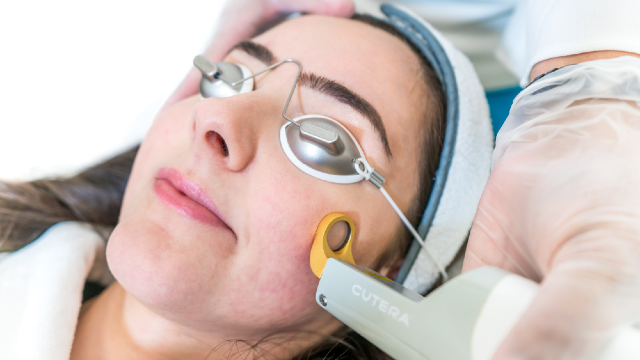
Acne scar laser treatment in Korea is not one procedure, and the single most useful thing to understand before you book is that the laser is chosen after your skin is examined, not before. A pore treatment Seoul clinic visit that begins with imaging rather than a menu is doing the sequence in the right order, because indented scars, textured scars and enlarged pores respond to different settings and sometimes to different devices altogether. At Plan Me Clinic, pore and acne scar treatment is a non-surgical, minimally invasive approach aimed at the appearance of enlarged pores, acne scarring and related skin-texture concerns, and it starts with a diagnostic scan.
Why "which laser for acne scars" comes second
Searching for a laser recommendation for acne scars in Korea produces confident answers, and most of them are premature. The scar type has to be identified first.
The StatPearls chapter on laser revision of scars, published by NCBI Bookshelf, explains that atrophic scars are dermal depressions that form when collagen is lost faster than it is rebuilt, and that they fall into three recognized subtypes: ice pick, boxcar and rolling. Ice pick scars are described there as narrow, deep, sharply defined tracts reaching into the deep dermis or the tissue beneath it. Those three shapes are not cosmetic labels. They describe different depths and different wall geometry, which is exactly what determines whether an energy-based device can reach the base of the scar at all.
The same chapter is specific about the mechanism: these depressions form where inflammation in the skin has driven collagen breakdown, and it notes that although acne is the common cause, infection, trauma and surgery can produce the same result. That matters for expectations. The tissue deficit is real, so the goal of treatment is to rebuild structure over time rather than to resurface a stain.
Enlarged pores are a separate problem again. A pore is a follicular opening, not a depression in the collagen network, so the treatment logic differs even when the two concerns sit side by side on the same cheek.
This is why a diagnostic-first sequence matters more than the brand name on the handpiece.
What the assessment at Plan Me Clinic actually measures
Treatment at Plan Me Clinic begins with a personal consultation with Dr. Seung-hwan Lee, followed by a precision skin diagnostic scan using multi-light facial imaging. The scan evaluates pore size, scar depth, pigmentation and overall skin condition, and the results are available immediately. Dr. Seung-hwan Lee then reviews those results together with your history before recommending an approach.
The clinic's diagnostic equipment includes a JANUS Skin Analysis System, and its treatment devices include a Clarity Laser and a CO₂ Laser alongside Helios II, Auto MTS and Dermashine systems. The imaging step is what connects the two: the scan produces the measurements, and the measurements select the modality.
Plan Me Clinic describes this as a consultation-first approach in which treatment is matched to the individual rather than delivered as a standardized package. In practical terms, treatment is calibrated to scar depth, pore appearance, pigmentation and overall skin condition, and different modalities may be combined according to what the imaging shows.
The modalities, and what each one is for
Depending on the diagnostic findings, treatment at Plan Me Clinic may involve fractional laser resurfacing, radiofrequency microneedling, growth-factor application, microneedle drug delivery, or a combination of these.
Fractional laser resurfacing. NCBI Bookshelf's StatPearls chapter on ablative laser resurfacing records that fractional lasers arrived in the early 2000s and work by treating the skin in narrow microscopic columns of light rather than the whole surface. The same chapter draws the distinction between fractional and non-fractional approaches as a matter of patient selection. Treating in columns leaves untreated skin between them, and that is the design intent.
Radiofrequency microneedling. This delivers energy through fine needles rather than through light. It is worth reading the safety literature here: the U.S. Food and Drug Administration has issued a safety communication stating that it is aware of reports of serious complications associated with certain uses of radiofrequency microneedling devices, including burns, scarring, fat loss, disfigurement and nerve damage, some requiring intervention. The FDA's recommendation to patients considering such a procedure is to seek care from a licensed health care provider trained and experienced in using these devices, and to ask which device the provider plans to use. That is a reasonable question to bring to any consultation, anywhere.
Growth-factor application. At Plan Me Clinic, a growth-factor serum may be applied after laser treatment as part of immediate aftercare.
Microneedle drug delivery. This is a delivery route rather than a resurfacing method, used where the diagnostic findings call for it.
Examples of how these get paired in practice include fractional laser resurfacing with growth-factor application for acne scars, and radiofrequency microneedling for enlarged pores.
Who this treatment suits
Plan Me Clinic describes suitable candidates as people in their 20s to 50s with:
- Visible indented, uneven or textured acne scars
- Persistent enlarged pores, particularly around the cheeks, nose or forehead
- Uneven makeup application caused by skin texture
- Limited improvement from topical products or basic peels
- An interest in a non-surgical, minimally invasive approach
- Realistic expectations of gradual improvement across several sessions
- An interest in a physician-led consultation and a treatment plan based on diagnostics
That last two points belong together. Improvement develops progressively over a series of sessions as collagen and elastin rebuild, and individual results vary with skin type, scar depth and aftercare. Anyone expecting a single visit to resolve years of scarring is working from the wrong timeline.
The American Academy of Dermatology makes a related point from the professional side: getting good results from acne scar treatment often requires in-depth knowledge of the skin and of which treatment suits each scar type, which is why dermatologists build an individualized plan for each patient rather than applying one method to everyone.
Session length, sensation and what the following days look like
A treatment session at Plan Me Clinic typically lasts 15 minutes to 1 hour, depending on which modalities are combined and how large the treated area is. Results are described as developing across a series of sessions, with follow-up visits used to reassess progress.
Topical numbing cream is applied before treatment.
Short-term effects reported by the clinic are light flaking, temporary redness and mild sensitivity in the treated areas, generally settling within a few days. Serious complications are described as uncommon but possible with laser- or needle-based procedures, and results may differ between patients. Downtime is generally minimal, and most people can return to daily activities shortly after treatment, though mild redness or light flaking may continue for a few days and usually resolves on its own.
Aftercare that protects the result
Plan Me Clinic advises avoiding rubbing the treated area, avoiding saunas and high heat, and refraining from alcohol and smoking for a short period after treatment. Consistent sun protection matters, as does avoiding excessive heat or friction on treated skin.
The American Academy of Dermatology, writing about skin care after acne scar treatment, notes that treated skin can be sensitive afterwards and advises applying sunscreen to the treated skin every day. Those two sets of instructions point the same direction, which is a good sign that the advice is not clinic-specific preference but standard practice.
Progress is also reassessed at follow-up visits rather than assumed, and post-treatment guidance is given as results develop.
You can see documented outcomes on the clinic's before-and-after gallery.
How this differs from a generic laser session
Plan Me Clinic frames its difference plainly: treatment is calibrated to scar depth and skin condition rather than delivered as a one-size-fits-all laser session, and the diagnostic results determine which modalities are combined and at what depth.
There is also a treatment-selection principle behind it. The clinic states that it recommends only treatments considered medically necessary. For scarring, where over-treatment carries real risk, a recommendation you can decline is worth more than a package you cannot.
The NCBI Bookshelf evidence review on managing acne vulgaris-associated scarring is candid that uncertainty remains about which intervention is most effective, and that availability of treatments varies. Read alongside the individualized-planning advice above, the practical conclusion is the same one: the decision has to be made on your skin, in person.
Planning around a course rather than a single visit
Because improvement builds as collagen and elastin rebuild, the useful planning unit is a course of sessions with follow-up in between, not one appointment. Plan Me Clinic uses follow-up visits to reassess progress, and post-treatment guidance is given at each stage as results develop. If you are weighing whether the trip fits your timeline, an online consultation is possible before you commit to an in-person assessment, which lets the discussion about scar type and realistic sequencing happen first.
The clinic's stated intent for this treatment is modest and specific: to support smoother skin texture, reduced pore visibility and improved evenness in previously scarred areas. Holding that as the target, rather than an unblemished result, is what makes a multi-session plan feel like progress instead of delay.
To ask about an assessment, use the clinic's consultation and inquiry page.
The Bottom Line
- Acne scars are not one thing. NCBI Bookshelf's StatPearls describes atrophic scars as collagen-loss depressions in three subtypes — ice pick, boxcar and rolling — and depth is what limits what a device can reach.
- Plan Me Clinic begins with a consultation with Dr. Seung-hwan Lee and a multi-light facial imaging scan measuring pore size, scar depth, pigmentation and skin condition, with results available immediately.
- Treatment may combine fractional laser resurfacing, radiofrequency microneedling, growth-factor application and microneedle drug delivery, selected from the diagnostic findings rather than from a fixed package.
- A session runs 15 minutes to 1 hour, and improvement builds across a series of sessions as collagen and elastin rebuild.
- Aftercare is not optional: avoid rubbing, high heat, alcohol and smoking for a short period, and use sun protection consistently.
Frequently Asked Questions
Who is a good candidate for pore and acne scar treatment?
Plan Me Clinic describes suitable candidates as people in their 20s to 50s with visible acne scarring, indented or uneven skin texture, enlarged pores, uneven makeup application over scarred areas, or limited improvement from topical products and basic peels. It also suits people who want a non-surgical, minimally invasive approach and who understand that improvement develops progressively over a series of sessions.
How long does a session take?
A treatment session typically lasts 15 minutes to 1 hour. The length depends on which modalities are combined and how large the treated area is.
What does the recovery look like?
Downtime is generally minimal. Most people resume daily activities shortly after treatment, although mild redness or light flaking may occur over the following few days and usually resolves on its own.
What are the common side effects?
Plan Me Clinic identifies light flaking, temporary redness and mild sensitivity as the common short-term effects, typically settling within a few days.
How does the clinic reduce risk?
The approach is diagnostic-first. Multi-light facial imaging assesses pore size, scar depth, pigmentation and overall skin condition before any treatment, and the combination of modalities is then matched to those findings rather than following a standardized protocol. Recommendations are physician-led and safety-first, and progress is reassessed at follow-up as results develop.
What should I avoid after treatment?
Avoid rubbing the treated area, saunas and high heat, and alcohol and smoking for a short period. Sun protection is important, and so is avoiding excessive heat or friction on treated skin.
Can it be combined with another procedure?
Yes, where the diagnostic findings support it. Plan Me Clinic describes customized combinations of fractional laser resurfacing, radiofrequency microneedling, growth-factor application and microneedle drug delivery — for example, fractional laser resurfacing with growth-factor application for acne scars.
What results are realistic?
The clinic describes realistic improvement as smoother overall skin texture, reduced pore visibility and improved evenness in previously scarred areas, developing across a series of sessions. Individual results vary with skin type, scar depth and aftercare.
This article is for general informational purposes and does not constitute individualized medical advice. It is not a self-diagnosis tool. Discuss your own skin, history and goals with a qualified dermatologist in person before starting any laser or needle-based treatment, and follow the guidance you are given.
More Articles
Continue reading our clinical guides.